Black Ops 7 Aim Training: How to Improve Your Aim
Improve your tracking, reaction speed, target switching, and weapon control for fast-paced Black Ops 7 firefights.
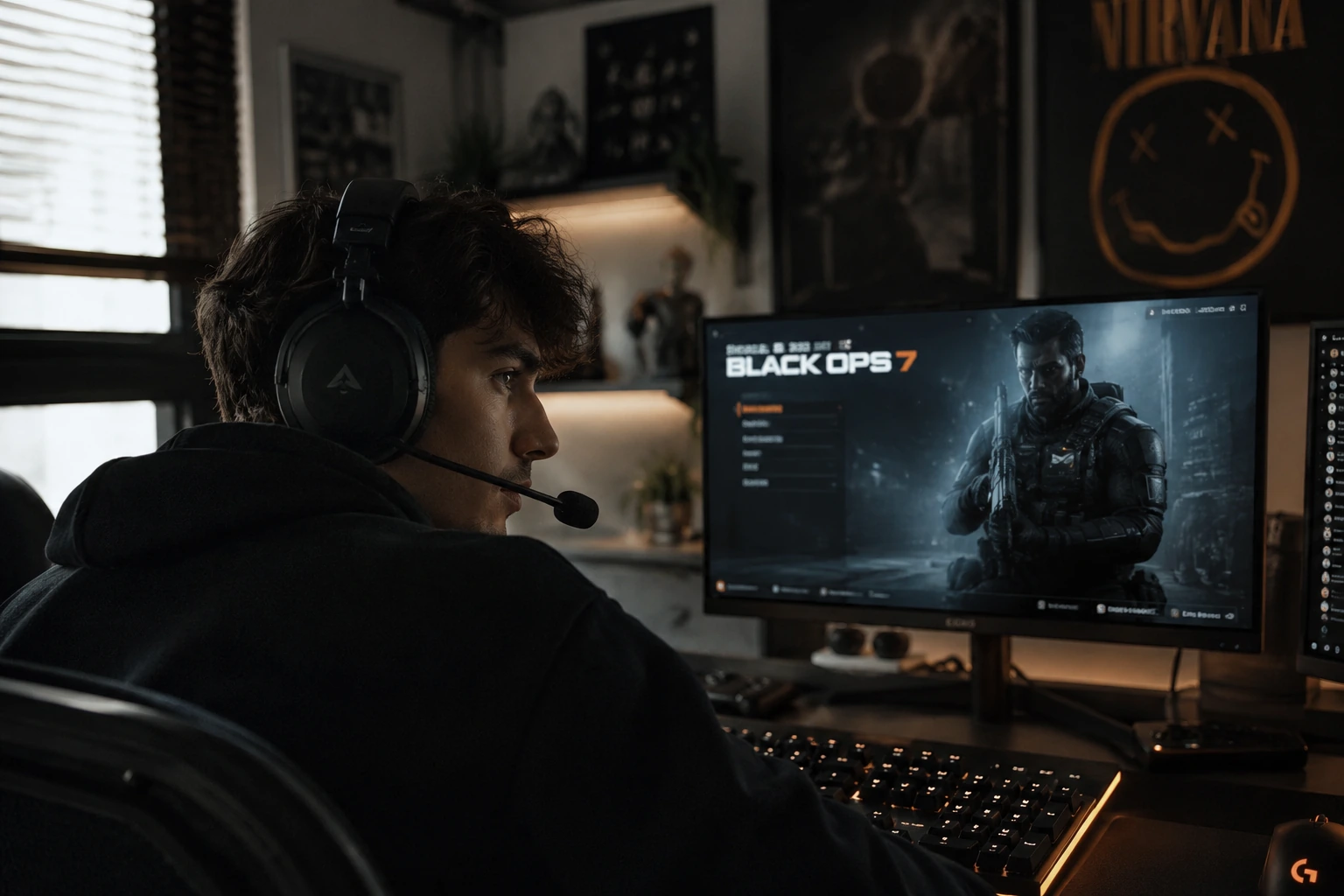 NightVector - Black Ops 7 Player
“After practising these drills, I track fast-moving enemies more smoothly, react quicker to sudden pushes, and switch between targets with much better control.”
Faster aim. Cleaner eliminations.
Black Ops 7 delivers fast-paced first-person combat across tight 6v6 arenas and larger 20v20 Skirmish battlefields. Its next-level Omnimovement system creates aggressive, unpredictable engagements where enemies can rapidly reposition across close, medium, and long ranges.
Good aim is not only about reacting first. You need smooth tracking against fast-moving players, controlled recoil during sustained fire, precise crosshair placement, and quick target switching when several opponents enter the fight.
This Black Ops 7 aim training guide will show you which mechanical skills matter most and how to practise them effectively.

How to practice your Black Ops 7 aim with 3D Aim Trainer
Consistent practice matters more than occasional long sessions. Train for 10 to 20 focused minutes several times per week, prioritising smooth tracking, fast target acquisition, and controlled accuracy.
Black Ops 7 aim training routine
Effective Black Ops 7 aim training should prepare you for fast-paced firefights, aggressive movement, and rapidly changing engagements. This routine combines tracking, flicking, reaction, clicking precision, and target-switching drills for the different combat situations found across Multiplayer.
You will practice following fast-moving enemies, snapping onto sudden threats, maintaining accuracy while targets reposition, and switching quickly between multiple opponents. Consistent training will improve the mouse control and reaction speed needed to win more gunfights in Black Ops 7.

Black Ops 7 key features

Required skills
- Fast-paced 6v6 combat: Fight across compact, three-lane maps designed for rapid encounters, frequent rotations, and constant pressure.
- Large-scale 20v20 Skirmish battles: Adapt your aim to wider battlefields, longer sightlines, and more enemies entering each engagement.
- Advanced Omnimovement: Track opponents as they sprint, slide, dive, and rapidly change direction during gunfights.
- Combat across multiple ranges: Switch between close-quarters fights, medium-range lane control, and longer-range engagements.
- Rapid target acquisition: React quickly to enemies appearing from doorways, flanking routes, elevated positions, and unexpected angles.
- Frequent multi-target encounters: Switch efficiently between opponents during objective pushes, coordinated attacks, and crowded firefights.
- Varied weapon handling: Adapt to different fire rates, recoil patterns, magazine sizes, and effective engagement ranges.
- Near-future combat technology: Maintain accuracy while equipment, abilities, visual effects, and advanced battlefield technology add pressure and distraction.

Which aiming skills matter most in Black Ops 7?
To improve your Black Ops 7 aim, focus on the four mechanical skills that matter most during fast-paced, movement-heavy firefights:
- Tracking: Maintain smooth control while enemies sprint, strafe, slide, dive, and rapidly change direction.
- Flicking and reaction: Snap onto opponents who suddenly appear from doorways, flanking routes, elevated positions, or unexpected angles.
- Target switching: Move quickly and accurately between multiple enemies during objective pushes and crowded firefights.
- Clicking precision: Land accurate opening shots on distant, partially exposed, or temporarily stationary targets.

Precision & Weapon Control
Black Ops 7 enemies can sprint, strafe, slide, dive, and rapidly change direction. Smooth tracking helps you keep your crosshair connected to moving targets and remain accurate throughout sustained gunfights.

Flicking & Reaction Speed
Fast engagements often begin with an opponent appearing from a doorway, flank, elevated position, or unexpected angle. Flicking practice helps you acquire sudden threats quickly and land your first shots sooner.

Target Switching
Objective pushes and crowded firefights can place several opponents in view at once. Target-switching drills help you move efficiently from one enemy to the next without losing control or overcorrecting.

Precision & Weapon Control
Accurate opening shots and controlled fire remain important across every engagement range. Precision practice helps you make cleaner crosshair corrections, manage sustained fire, and finish targets without wasting shots.
Ready to sharpen your aim?

Why do these aim exercises work for Black Ops 7?
Training your aim with a focused Black Ops 7 routine helps you in two key ways:
1. By training the aiming skills most relevant to fast-paced firefights
The routine combines tracking, flicking, target switching, and clicking precision. Tracking drills help you stay accurate against enemies who sprint, strafe, slide, dive, and rapidly change direction. Flicking improves your response to sudden threats, target switching prepares you for fights involving several opponents, and clicking practice helps you land cleaner opening shots.
These skills are valuable across close-range encounters, medium-range lane fights, objective pushes, and larger multiplayer battles.
2. By building faster and more consistent aim through focused practice
Aim drills provide repeatable situations without the distractions of a live match. You can focus on maintaining smooth control, reacting quickly, making cleaner corrections, and moving efficiently between targets.
With consistent practice, these movements become more reliable, helping you acquire enemies faster, stay accurate during aggressive movement, and win more gunfights in Black Ops 7.


Bonus: Black Ops 7 tips to fine-tune your aim
The right mouse sensitivity and eDPI can make a major difference to your consistency in Black Ops 7. If you are unsure where to start, use our Mouse Sensitivity Finder or Mouse Sensitivity Converter to find a comfortable sensitivity and keep it consistent across your training and in-game sessions.
Sensitivity that is too high can cause overshooting and unstable tracking, while sensitivity that is too low can make rapid turns, flicks, and target switching more difficult. The goal is to find a balance that gives you precise control while still allowing you to react quickly during fast-paced firefights.
Once you choose your settings, avoid changing them after every poor match. Give yourself enough time to build familiarity and evaluate your performance across tracking, flicking, and close-range engagements.